Greny Wish: The Power of Bold Typography in Modern Visual Design
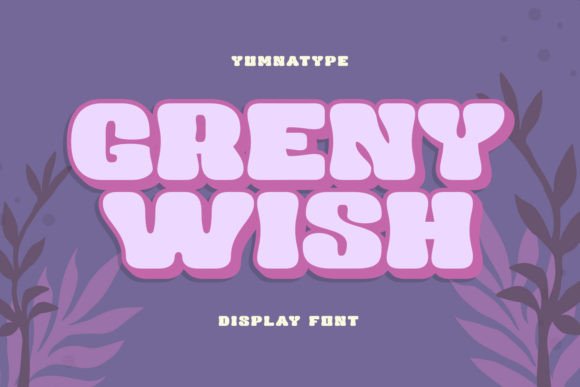
In the crowded landscape of digital and print media, the ability to capture immediate attention is often the difference between a message that resonates and one that is overlooked. Typography serves as the primary vehicle for this visual communication, acting not merely as a container for text but as an active participant in the storytelling process. Among the myriad of typefaces available to designers today, Greny Wish stands out as a distinctive solution for those seeking to make a strong statement. This all-caps display font is engineered to command attention, delivering a powerful presence that transcends standard typographic expectations. By combining a very bold weight with low contrast and rounded shapes, Greny Wish offers a unique aesthetic that balances authority with approachability.
The Anatomy of Impact: Deconstructing the Design
To understand why Greny Wish functions so effectively in high-impact scenarios, one must first examine its structural components. Unlike serif fonts that rely on intricate details or thin sans-serifs that prioritize minimalism, Greny Wish embraces a philosophy of solidity. Its defining characteristic is the very bold weight, which creates a heavy visual mass. In design theory, weight correlates directly with perceived importance; heavier elements naturally draw the eye before lighter ones. When applied to headlines, logos, or call-to-action buttons, this inherent weight ensures that the text cannot be ignored.
Beyond mere thickness, the font utilizes low contrast between its thick and thin strokes. In traditional typography, high contrast—where vertical lines are thick and horizontal lines are thin—can create elegance but may also introduce fragility, especially at smaller sizes or in low-resolution environments. Greny Wish eliminates this variance, ensuring a cohesive and solid appearance across all mediums. This uniformity contributes to a sense of stability and reliability, making the text feel grounded and substantial. Whether viewed on a massive billboard or a mobile screen, the consistency of the stroke width maintains legibility and visual integrity.
Perhaps the most intriguing aspect of Greny Wish is the integration of rounded shapes within its otherwise assertive structure. Sharp corners and rigid edges can sometimes convey aggression or coldness. By softening these angles, the font introduces a friendly touch that humanizes the message. This juxtaposition of a commanding bold weight with gentle curves creates a psychological bridge between authority and warmth. It allows brands and creators to project confidence without appearing intimidating, a nuance that is increasingly valuable in modern consumer interactions.
Strategic Applications Across Industries
The versatility of Greny Wish extends far beyond simple decorative use. Its specific combination of traits makes it suitable for a wide array of professional applications where clarity and impact are paramount. For business owners looking to revitalize their brand identity, this typeface offers a fresh alternative to the overused geometric sans-serifs that dominate corporate communications. When used for company logos, the rounded forms suggest a customer-centric approach, while the bold weight signals market leadership and strength.
In the realm of advertising and marketing, the font excels in creating memorable visuals. Consider a campaign for a new product launch; the headline needs to stop the scroll instantly. Using Greny Wish for the main tagline ensures that the core message is delivered with maximum force. The all-caps format further amplifies this effect, as uppercase letters are generally perceived as louder and more urgent than mixed-case text. However, because of the rounded terminals, the urgency does not come across as panic-inducing, maintaining a tone of excitement rather than alarm.
Educators and researchers also find value in utilizing distinct typography to organize information hierarchically. While body text requires high readability at small sizes, section headers benefit from distinctiveness. Greny Wish can serve as an excellent choice for presentation titles, workshop banners, or educational posters where engagement is key. The friendly nature of the rounded shapes makes complex topics appear more accessible, inviting the audience to engage with the material rather than feeling overwhelmed by dense academic language.
- Event Branding: Festivals, conferences, and community gatherings often require signage that is both readable from a distance and welcoming. The bold weight ensures visibility, while the rounded edges contribute to a festive atmosphere.
- Social Media Graphics: In the fast-paced environment of social feeds, images with clear, bold text perform significantly better. Greny Wish provides the necessary punch to stand out against colorful backgrounds and competing content.
- Packaging Design: Product packaging relies heavily on shelf appeal. A label featuring this font can communicate quality and friendliness simultaneously, influencing purchasing decisions at the point of sale.
- App Interfaces: For mobile applications, particularly those focused on lifestyle, wellness, or entertainment, the font can be used for primary navigation buttons or feature highlights to guide user interaction intuitively.
Navigating Implementation Challenges
While Greny Wish offers significant advantages, effective implementation requires an understanding of its limitations and best practices. Because it is a display font designed for headlines and short bursts of text, it is not intended for long-form reading. The very bold weight and all-caps structure can cause eye strain if used for paragraphs of body copy. Designers must exercise restraint, reserving the font for titles, subtitles, and emphasis points where its impact is most needed.
Spacing and kerning are critical considerations when working with such a heavy typeface. The solid appearance means that letterforms occupy significant space, and improper spacing can lead to a cluttered look where individual characters merge into an unreadable block. Conversely, too much space can break the visual rhythm of the word. Achieving the right balance often requires manual adjustment to ensure that the "cohesive and solid appearance" remains intact without sacrificing legibility.
Color selection also plays a pivotal role in maximizing the potential of Greny Wish. Due to the low contrast and heavy weight, the font works exceptionally well with high-contrast color pairings, such as white text on a dark background or vice versa. However, because of the rounded shapes, it also accommodates softer, pastel palettes effectively, allowing for a playful yet professional aesthetic. Designers should experiment with gradients and textures to add depth, leveraging the font's solid form as a canvas for creative expression.
Comparative Analysis in the Type Landscape
When compared to other bold display fonts, Greny Wish occupies a unique niche. Many bold fonts lean heavily into either extreme rigidity or excessive playfulness. Geometric fonts like Futura Extra Bold offer precision but can feel sterile. Blackletter or slab-serif fonts provide character but may lack the universal appeal required for broad audiences. Greny Wish strikes a middle ground, offering the structural integrity of a geometric font with the organic warmth of a humanist design.
This differentiation is crucial for brands aiming to avoid generic aesthetics. In a market saturated with similar-looking designs, choosing a font that possesses a distinct personality can set a project apart. The rounded terminals of Greny Wish provide a signature detail that is instantly recognizable, contributing to brand recall. Unlike fonts that rely on serifs or ligatures for distinction, this font uses its silhouette and stroke modulation to create identity.
Furthermore, the adaptability of the font across different cultural contexts is worth noting. The simplicity of the shapes avoids specific cultural associations that might limit its global applicability. This neutrality, combined with the friendly undertone, makes it a safe yet striking choice for international campaigns where clarity and positive sentiment are essential.
Future Trends and Typographic Evolution
The evolution of digital design continues to favor typography that is both functional and expressive. As screens become larger and resolutions higher, there is a growing demand for fonts that can fill space without losing detail. Greny Wish aligns perfectly with this trend, offering a robust structure that scales effortlessly. Moreover, the shift towards more inclusive and friendly design languages supports the rise of rounded, approachable typefaces. Audiences are increasingly drawn to brands that feel human and accessible, moving away from the cold, corporate imagery of the past.
As artificial intelligence and automated design tools become more prevalent, the need for unique, curated typefaces will only increase. Generic system fonts are becoming less effective in capturing attention. Custom or specialized display fonts like Greny Wish allow creators to inject personality and intentionality into their work. They serve as a reminder that design is a craft, requiring thoughtful selection and application to achieve the desired emotional response.
Ultimately, the success of any typographic choice lies in its ability to serve the message. Greny Wish succeeds because it does not just present words; it enhances them. By combining a powerful presence with a friendly touch, it empowers professionals, creators, and business owners to communicate with clarity and conviction. Whether used to announce a major product launch, title an educational resource, or simply grab attention in a busy feed, this font delivers on its promise to make a strong statement. In the ever-evolving world of visual communication, having a tool that commands attention while remaining approachable is an invaluable asset.