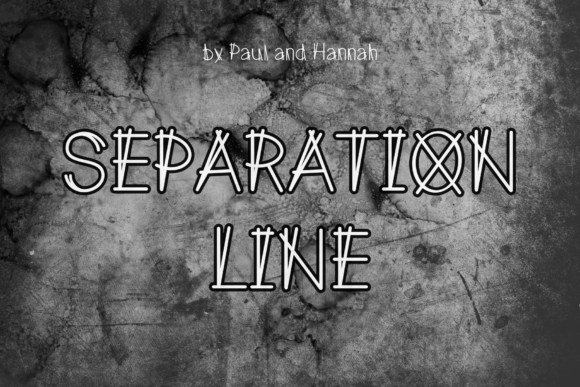
Separation Line: A Distinctive Spectrum-Inspired Font
In the crowded landscape of digital and print design, finding a typeface that commands attention without shouting is a persistent challenge. Most fonts strive for clarity or elegance, but Separation Line takes a different path entirely. It does not merely sit on the page; it interacts with the space around it through a concept rooted in physics and light. This font is inspired by the dividing lines of a spectrum. Those dividing lines are beautiful in themselves, so the author came up with the idea of using those beautiful lines to cut them into letters, resulting in a unique and distinctive font. For professionals seeking to elevate their visual communication, understanding the mechanics and application of this typographic approach can transform how audiences perceive your brand, message, or creative project.
The Visual Philosophy Behind the Design
To appreciate the utility of Separation Line, one must first understand its structural origin. Traditional typography often treats the letterform as a solid block of ink or pixels. In contrast, Separation Line treats the letter as a void carved out by precise, luminous boundaries. The inspiration drawn from the dividing lines of a spectrum suggests a transition between states—a shift from one color to another, or from darkness to light. By applying this logic to alphabetic characters, the font creates an illusion of depth and movement that static typefaces rarely achieve.
This design philosophy matters because it changes the viewer's cognitive processing. When a reader encounters standard text, they scan for meaning. When they encounter Separation Line, the eye is first drawn to the aesthetic tension created by the "cut" lines. This initial engagement buys you more time to deliver your message. The beauty of the dividing lines serves as a hook, ensuring that the content within the letters is noticed. It is a subtle psychological lever that designers and marketers can pull to increase retention rates on headers, logos, and key call-to-action elements.
Enhancing Brand Identity Through Unique Typography
For entrepreneurs and small business owners, differentiation is the currency of survival. In sectors like technology, wellness, and modern publishing, brands often struggle to stand out against a sea of sans-serif uniformity. Separation Line offers a solution by providing a signature look that is instantly recognizable. Because the font relies on the specific geometry of spectrum-like divisions, it is difficult to replicate with generic alternatives.
Consider a startup in the renewable energy sector. Their brand values likely include clarity, innovation, and the breaking down of complex systems. Using Separation Line in their logo or website headers visually reinforces these values. The "cut" in the letters mimics the splitting of atoms or the separation of light, creating a subconscious association with scientific precision and modernity. Similarly, a fashion blogger or lifestyle influencer might use this typeface to suggest a curated, high-end aesthetic. The distinctiveness of the font signals to the audience that the content behind it is equally thoughtful and exclusive.
However, this uniqueness requires strategic placement. Because the font is so distinctive, it should not be used for body copy where legibility is paramount. Instead, it shines when used sparingly for headlines, chapter titles, or branding elements. This restraint ensures that the impact remains high and prevents the audience from becoming fatigued by the visual complexity.
Practical Applications in Digital and Print Media
The versatility of Separation Line extends across various media formats, though its implementation varies based on the medium. In digital environments, such as websites and mobile applications, the sharpness of the dividing lines can render beautifully on high-resolution screens. Web developers can leverage the font's open structure to create interactive effects, such as hover states where the "lines" glow or animate, further emphasizing the spectrum inspiration.
- Web Headers: Use the font for H1 and H2 tags to break the monotony of standard web layouts. The visual weight of the lines draws the eye immediately to the section topic.
- Social Media Graphics: On platforms like Instagram or LinkedIn, where users scroll rapidly, bold typography is essential. Separation Line can turn a simple quote or statistic into a shareable piece of art.
- Print Collateral: In brochures, business cards, and posters, the font works exceptionally well with metallic inks or spot UV coatings. The physical texture of the paper combined with the "cut" design of the letters creates a tactile experience that elevates the perceived value of the printed material.
Educators and publishers may find particular value in using this font for book covers or educational materials focused on science and mathematics. The connection to the spectrum provides a thematic link that resonates with students and readers interested in analytical subjects. It transforms a textbook cover from a mere label into a visual representation of the subject matter.
Who Benefits Most from This Typeface?
While any creator can technically use Separation Line, certain professions will derive significantly more value from its specific characteristics. Freelancers and graphic designers looking to expand their portfolio with experimental work will find this font invaluable. It demonstrates a willingness to explore non-traditional forms and an understanding of advanced typographic concepts. For marketing agencies, it offers a tool to craft campaigns that feel fresh and forward-thinking, helping clients avoid the trap of looking like every other competitor.
Small business owners in creative industries—such as photography studios, architectural firms, and boutique consulting practices—are also prime candidates. These businesses rely heavily on perception. A logo or header designed with Separation Line communicates a level of sophistication and attention to detail that can justify higher service fees. It tells the client, "We see the world differently, and we bring that perspective to your project."
Conversely, industries that prioritize rapid information consumption over aesthetic flair, such as emergency services or basic news reporting, might find the font less suitable. In scenarios where milliseconds matter, the decorative nature of the dividing lines could impede quick reading. Therefore, the decision to adopt Separation Line should always be weighed against the primary goal of the communication channel.
Navigating Limitations and Design Considerations
Despite its strengths, Separation Line is not a universal solution. Its very strength—the intricate dividing lines—is also its limitation. At small sizes, the delicate cuts that define the letters can become indistinct, leading to legibility issues. Designers must ensure that the font is used at a sufficient scale to maintain clarity. It is generally not recommended for footnotes, captions, or dense paragraphs of text.
Furthermore, the font's distinctive style means it competes for attention. If paired with other highly decorative elements, the overall design can become chaotic. To maximize effectiveness, Separation Line should be balanced with clean, neutral typefaces for body text. This contrast allows the spectrum-inspired letters to shine without overwhelming the reader. Additionally, color choice plays a critical role. Since the font is inspired by the spectrum, utilizing gradients or high-contrast color palettes can enhance the effect, while muted, low-contrast combinations might diminish the intended impact.
Before committing to this typeface for a major rebranding effort, it is wise to test it across different devices and printing methods. What looks crisp on a monitor may lose definition on a matte finish paper. Prototyping is essential to ensure that the "beautiful lines" remain visible and effective in the final delivery format.
Conclusion: Elevating Communication Through Form
The introduction of Separation Line into the typographic toolkit represents more than just a new aesthetic option; it is a reminder that form and function can coexist in unexpected ways. By drawing inspiration from the natural phenomenon of a spectrum and translating those dividing lines into letterforms, the author has created a tool that bridges the gap between art and utility. For adults navigating the professional world—whether as creators, business owners, or communicators—this font offers a pathway to express uniqueness and intentionality.
When used with discernment, Separation Line can strengthen brand identity, improve visual engagement, and simplify the decision-making process for designers who need a statement piece. It invites the audience to pause and look closer, turning a simple line of text into a memorable visual experience. As the digital landscape continues to evolve, embracing fonts that challenge conventional norms will remain a key strategy for those aiming to leave a lasting impression.