Wild Love: A Quirky Display Font That Demands Careful Use
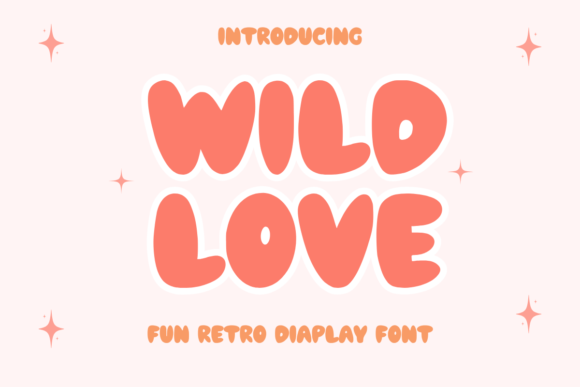
Typography is the voice of your design, and sometimes that voice needs to be loud, joyful, and unapologetically cute. Wild Love fits this description perfectly. It is a display font characterized by its quirky, hand-drawn aesthetic that instantly injects a sense of playfulness into any project. Whether you are designing a wedding invitation, a children's book cover, or a boutique logo, this typeface has the power to make your creative ideas stand out from a sea of sterile, corporate sans-serifs. However, like any expressive tool, it requires a steady hand and a clear vision to use effectively.
Many designers, particularly those new to typography or small business owners handling their own branding, fall in love with fonts like Wild Love at first glance and immediately apply them everywhere. This enthusiasm is understandable, but it often leads to designs that feel cluttered, unreadable, or unintentionally childish. The goal is not to avoid using this beautiful font, but to understand exactly where it shines and where it might undermine your message.
The Trap of Overusing Display Fonts
The most common mistake when working with a character-driven typeface like Wild Love is treating it as a body text font. Because it is so visually engaging, there is a temptation to write long paragraphs in it to maintain the "vibe" throughout an entire document or website section. This is a critical error that compromises readability and user experience.
Display fonts are designed for impact, not endurance. When you stretch Wild Love across multiple lines of dense text, the irregular spacing, varying stroke widths, and decorative elements begin to compete for the reader's attention. Instead of absorbing your content, the reader struggles to track the words. This creates friction, causing potential customers or audience members to disengage before they even understand your message.
Better Approach: Restrict Wild Love to headlines, short taglines, logos, or pull quotes. Pair it with a clean, neutral sans-serif or a simple serif font for your body copy. This contrast allows the personality of the display font to pop without sacrificing legibility. For example, use Wild Love for a bold "Join Our Adventure!" header, but switch to a standard font like Open Sans or Lato for the descriptive paragraph below it.
Context Matters: Who Is Your Audience?
Another frequent oversight is ignoring the context of the brand or project. While Wild Love brings joy and whimsy, it may not align with every brand identity. Using a quirky, cute font for a serious financial consultancy, a law firm, or a medical service can send mixed signals about professionalism and trustworthiness.
This isn't about being boring; it's about alignment. If your brand promises reliability and precision, a bouncy, uneven typeface might inadvertently suggest carelessness. Conversely, if you are launching a line of organic baby products, a playful bakery, or a creative workshop series, Wild Love is likely the perfect fit. The key is to evaluate whether the "quirky" nature of the font supports your specific value proposition.
Practical Check: Before finalizing your design, ask yourself: "Does this font reinforce what I am selling?" If the answer is ambiguous, test the design with a few people outside your immediate circle. Their initial reaction will often reveal whether the tone feels authentic or jarring.
Common Pitfalls in Sizing and Spacing
Even when used correctly in headlines, Wild Love can look messy if the technical execution is poor. Because it is a hand-lettered style font, the letterforms often have unique shapes that require generous spacing. A common mistake is cramming letters together or setting the text too small, which causes the intricate details to blur into an illegible blob.
When you download and install the font, do not simply accept the default settings in your design software. You must manually adjust the tracking (letter-spacing) and leading (line-height). In many cases, increasing the letter-spacing slightly will allow each character to breathe, enhancing the "wild" and free-spirited feel rather than creating visual noise. Similarly, ensure the font size is large enough for the decorative strokes to remain distinct, especially on mobile screens where pixel density varies.
Consider the background as well. Placing a light-colored version of Wild Love against a busy, patterned background is a recipe for disaster. The contrast must be high. If your background is complex, consider adding a subtle drop shadow or placing the text inside a solid color block to ensure it remains readable while retaining its charm.
Evaluating Licensing and Quality
Before you commit to using Wild Love for a commercial project, it is vital to verify the licensing terms. Many creators find beautiful fonts on free repositories, only to discover later that the license restricts commercial use or requires attribution. Ignoring these details can lead to legal complications or the need for costly redesigns down the line.
Always check the documentation provided with the download. Look for specific clauses regarding web use, print runs, and merchandise. If you are a freelancer working for a client, ensure you are purchasing the correct license tier that covers their needs. Using a personal-use-only font for a client's marketing campaign is a significant professional misstep that can damage your reputation.
Additionally, evaluate the character set. Does the font include all the characters you need? Some display fonts lack certain ligatures, numbers, or special characters required for your specific language or industry. Test the font with your actual project text before buying or downloading. If you need to write a phone number or a URL and the font lacks a proper zero or lowercase 'l', you will have to switch fonts mid-sentence, breaking the visual harmony of your design.
Maximizing Impact Through Restraint
The true power of Wild Love lies in its ability to evoke emotion quickly. It says "hello," "celebrate," and "fun" without needing a single word of explanation. To leverage this, use restraint. Let the font do the heavy lifting for the mood, and let other design elements handle the information delivery.
Think of Wild Love as the exclamation point in your design sentence. You wouldn't write an entire essay in exclamation points, yet many designers attempt to do just that with expressive typefaces. By limiting its application to key focal points, you create a hierarchy that guides the viewer's eye naturally. This approach ensures your design stands out for the right reasons—clarity, creativity, and intentionality.
In conclusion, Wild Love is a fantastic asset for anyone looking to add a joyful, quirky touch to their creative work. It has the potential to transform a standard layout into something memorable and heartwarming. However, its success depends entirely on how thoughtfully it is applied. By avoiding common pitfalls like overuse, poor sizing, and context mismatches, you can ensure that your designs not only look beautiful but also communicate effectively. Take the time to pair it wisely, respect the licensing, and test your layouts thoroughly. With these precautions, Wild Love will become a reliable partner in bringing your unique vision to life.