Evaluating the Beagle Handwritten Font for Design Projects
In the landscape of digital typography, the demand for fonts that convey personality and authenticity has grown significantly. Among the various options available, Beagle stands out as a distinct choice for designers seeking a handwritten aesthetic. Described as a neat and beautiful typeface with an elegant touch, Beagle offers a unique blend of casual fluidity and structured readability. However, before integrating this font into a project, it is essential to understand its characteristics, limitations, and ideal applications to ensure it aligns with specific design goals.
Understanding the Beagle Typeface
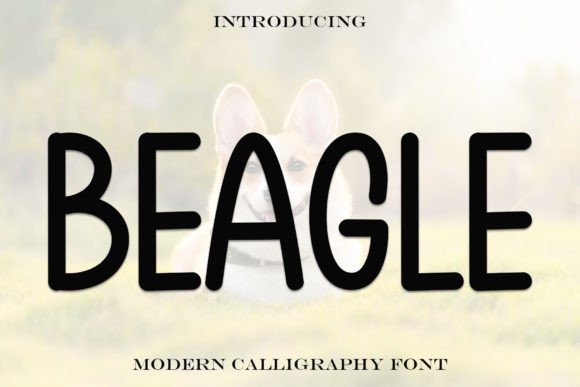
Beagle is a handwritten font designed to mimic the natural flow of human penmanship while maintaining a level of consistency suitable for digital media. Unlike chaotic or overly stylized script fonts that can become difficult to decipher, Beagle prioritizes legibility without sacrificing its organic feel. The strokes are crafted to appear as if written with a fine-point marker or fountain pen, featuring subtle variations in thickness and slight irregularities that prevent the text from looking mechanical.
The "elegant touch" often associated with Beagle comes from its refined letterforms. While it retains the charm of a personal note, the spacing and kerning are optimized to create a cohesive visual rhythm. This makes it a versatile asset for projects requiring a balance between professionalism and approachability. It is not merely a decorative element but a functional typeface capable of carrying body copy in certain contexts, provided the size and contrast are managed correctly.
Reasons to Consider Beagle for Your Projects
Designers and content creators often gravitate toward Beagle for several practical reasons. First, the font's distinct style allows brands to establish a unique voice. In a market saturated with geometric sans-serifs and traditional serifs, a well-executed handwritten font like Beagle can serve as a differentiator. It suggests creativity, warmth, and a human connection, which are valuable attributes for industries such as lifestyle, education, artisanal goods, and personal branding.
Secondly, the versatility of Beagle extends across various mediums. Its clean lines translate well to both screen and print. Whether used for a mobile app interface, a wedding invitation, or a packaging label, the font maintains its integrity. The timeless nature of the style ensures that designs do not quickly look dated, offering longevity to the visual identity it supports. Furthermore, because it is described as "neat," it reduces the cognitive load on the reader, making it easier to consume information compared to more elaborate script fonts.
Benefits and Practical Advantages
- Emotional Resonance: Handwritten fonts inherently evoke feelings of intimacy and trust. Beagle leverages this to build rapport with the audience.
- Readability: Despite being a script font, its structure supports better readability than many alternatives, allowing for longer headlines or short paragraphs.
- Aesthetic Flexibility: The elegant yet casual nature of Beagle pairs well with a wide range of complementary fonts, from bold slabs to minimalist sans-serifs.
- Visual Hierarchy: The distinct character shapes help draw attention to key messages, making it effective for call-to-action buttons or highlighted quotes.
Tradeoffs and Considerations
While Beagle offers significant aesthetic benefits, it is not a universal solution for every design challenge. One primary tradeoff is the potential limitation in scalability. Like many handwritten fonts, extremely small sizes may result in reduced legibility, particularly on lower-resolution screens. Designers must carefully test the font at various point sizes to ensure the intricate details of the letters remain visible.
Another consideration is the context of use. A font that feels elegant and inviting in a creative portfolio might feel too informal for a legal document, a financial report, or a medical website where strict neutrality is required. The "handwritten" quality implies a lack of corporate rigidity, which can be a disadvantage when the goal is to project authority or technical precision. Additionally, while Beagle is distinct, overuse can lead to visual fatigue. If a brand uses it exclusively for all text elements, the design may lose its impact and appear cluttered.
Situations Where Alternatives May Be Better
There are specific scenarios where choosing a different typeface would be a more strategic decision. For instance, if a project requires extensive body copy, a serif or sans-serif font is generally superior for long-form reading. The eye moves more smoothly across uniform letter heights and consistent stroke widths found in standard typefaces. Similarly, for users with visual impairments, the variability in a handwritten font like Beagle can sometimes pose accessibility challenges compared to highly legible, open-faced fonts.
Furthermore, if the brand identity relies heavily on modernism, futurism, or industrial strength, the soft curves of Beagle might clash with the overall message. In these cases, a geometric or brutalist font would better align with the desired tone. It is crucial to evaluate whether the "elegant touch" of Beagle enhances the core message or distracts from it.
Determining Fit: A Decision Framework
To determine if Beagle is the right choice for a specific project, consider the following decision-making insights. Start by defining the primary emotion you wish to evoke. If the goal is to feel personal, warm, and creative, Beagle is a strong contender. Next, assess the volume of text. If the usage is limited to headlines, logos, or short phrases, the font is likely a good fit. If the design requires large blocks of text, consider using Beagle only for emphasis and pairing it with a neutral secondary font.
Finally, test the font in the actual environment where it will be viewed. Create mockups of the design in both light and dark modes, and view them on different devices. Observe how the "distinct and timeless style" holds up against background colors and images. If the text remains clear and the elegance translates effectively across platforms, then Beagle is likely a suitable addition to your toolkit.
Conclusion
Beagle represents a compelling option for those seeking a handwritten font that balances beauty with functionality. Its neat structure and elegant touch make it a standout choice for creating spectacular designs that require a human element. However, like any design tool, its effectiveness depends on appropriate application. By understanding its strengths, acknowledging its limitations, and evaluating it against specific project requirements, designers can make informed decisions that enhance their work rather than simply decorating it. When used thoughtfully, Beagle can transform a standard layout into a memorable and engaging experience.