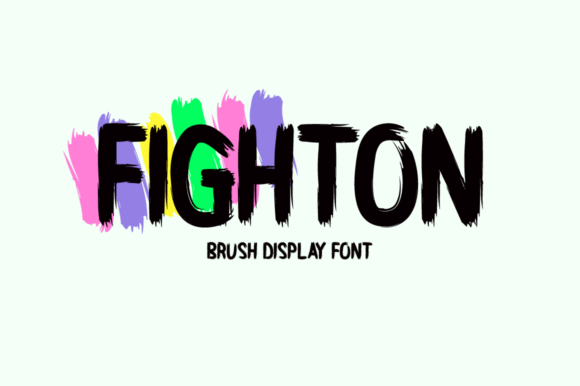
Fighton: A Vibrant Brush-Style Display Font
In the crowded landscape of digital and print design, finding a typeface that feels both energetic and authentic is often the hardest part of the creative process. Fighton answers this need with a distinct personality. It is not merely a collection of letters; it is a visual statement characterized by its vibrant brush-style strokes. This display font brings a fresh, artistic flair to your designs, mimicking the organic texture of hand-painted signage while maintaining the consistency required for professional production. Whether you are a freelancer crafting a personal brand or a small business owner launching a new product line, Fighton offers a versatile tool to capture attention without sacrificing readability.
The Artistic Appeal of Hand-Painted Typography
What makes Fighton particularly interesting is its ability to bridge the gap between raw creativity and structured design. In an era dominated by sleek, geometric sans-serifs and rigid serifs, the irregularity of a brush font can feel surprisingly human. The varying stroke widths and natural imperfections inherent in the Fighton design evoke the feeling of a marker or paintbrush moving across paper. This tactile quality resonates with audiences who value authenticity and craftsmanship.
For designers, this aesthetic provides an immediate emotional hook. When used correctly, Fighton suggests movement, energy, and approachability. It tells the viewer that the content behind it is dynamic and created by real people. However, the utility of Fighton extends beyond just looking cool. Its structure is robust enough to hold up in various sizes and contexts, making it a practical choice for projects that require a bit of soul but still need to function effectively as communication tools.
Building Brand Identity with Character
One of the most powerful applications for Fighton is in logo design and branding for creative industries. Startups, artisanal food brands, and lifestyle bloggers often struggle to find a voice that stands out from corporate competitors. Fighton allows these entities to project a bold, confident identity. Imagine a coffee shop logo where the name is rendered in Fighton, suggesting a warm, handmade atmosphere. Or consider a fitness apparel brand using the font on t-shirts to convey grit and determination.
When adapting Fighton for branding, consistency is key. While the font itself has variation, the way you apply it should remain uniform across all touchpoints. Use the same weight and color palette for your primary logo mark to ensure instant recognition. You might pair Fighton with a clean, neutral sans-serif for body copy to create a balanced hierarchy. This contrast ensures that the vibrancy of the display font draws the eye, while the supporting text remains easy to read. By anchoring your brand with such a distinctive typeface, you create a memorable visual signature that clients and customers will associate with your unique value proposition.
Practical Applications Across Media
The versatility of Fighton shines when exploring its use across different media formats. Because it is designed as a display font, it excels in headlines and short bursts of text where impact is more important than long-form legibility. Let’s explore how different professionals can leverage this asset in their specific workflows.
- Print Media and Stationery: For those creating physical goods, Fighton is ideal for flyers, posters, and event invitations. The brush strokes add a layer of excitement that standard fonts cannot achieve. On stationery items like notebooks, greeting cards, and packaging labels, the font adds a personal touch that elevates the perceived value of the product.
- Digital Headers and Web Design: Website headers benefit significantly from the energy of Fighton. Placing the font at the top of a landing page or within image sliders can immediately set the tone for the user experience. Just be mindful of screen resolution; ensure the file size is optimized so the intricate brush details do not pixelate on mobile devices.
- Musical and Entertainment Covers: Music covers and album art often rely on typography to convey genre and mood. Fighton fits perfectly within indie, rock, folk, and alternative genres where a raw, unpolished look is desirable. It works equally well on vinyl sleeves, streaming thumbnails, and promotional banners.
- Apparel and Merchandise: T-shirts, hoodies, and tote bags provide a large canvas for Fighton. The bold nature of the strokes translates well to fabric printing techniques like screen printing and DTG (Direct-to-Garment). When designing for apparel, consider how the letterforms interact with the folds and curves of the material.
Navigating Layout Challenges
While Fighton is visually striking, working with brush-style fonts requires attention to layout mechanics. Unlike monospaced or strictly kerned fonts, the width of each character in Fighton can vary significantly. This means that automatic justification can sometimes lead to uneven spacing or "rivers" of white space in justified paragraphs. To maintain a professional look, always left-align or center your text blocks containing Fighton. Avoid right-aligning or justifying long lines of text, as the irregular edges can make the alignment look messy rather than intentional.
Furthermore, tracking and leading play a crucial role in maximizing the font's potential. Slightly increasing the letter spacing (tracking) can enhance the readability of all-caps headlines, giving each brush stroke room to breathe. Conversely, tightening the spacing slightly can create a denser, more aggressive look suitable for bold statements. Experimentation is necessary here; what looks good on a high-resolution monitor might need adjustment when printed on a flyer or viewed on a smartphone screen.
Strategic Adaptation for Different Audiences
Understanding your audience is critical when deciding how to deploy Fighton. For educators and hobbyists creating workshop materials, the font can make learning materials feel less intimidating and more inviting. It breaks down the barrier between formal instruction and creative exploration. For entrepreneurs targeting a younger demographic, the font aligns with current trends favoring retro and street-art aesthetics. However, for corporate clients or formal publications, Fighton should be used sparingly, perhaps only for accent phrases or decorative elements, to avoid undermining the seriousness of the content.
Marketers should also consider the context of the message. If the goal is to sell a luxury service, the casual nature of Fighton might clash with the desired premium feel unless paired very carefully with high-end imagery and minimalist layouts. In contrast, for a community event, a local festival, or a charity drive, the font’s approachable vibe fosters a sense of connection and enthusiasm. The key is to let the font serve the message, not overpower it.
Maintaining Clarity and Consistency
To ensure your designs remain effective and organized, establish clear guidelines for using Fighton within your projects. Limit its use to headlines, subheads, and short captions. Resist the temptation to use it for body copy, as the decorative nature of the brush strokes can strain the reader's eyes over long passages. By restricting its application, you preserve its impact and ensure that your overall design remains accessible.
Color choices also influence how Fighton is perceived. High-contrast combinations, such as black on white or neon on dark backgrounds, maximize the visibility of the brush details. Pastel tones can soften the impact, making the font feel more whimsical and gentle. Regardless of the color scheme, always test your designs in grayscale before finalizing them. This simple step helps verify that the contrast is sufficient and that the letterforms remain distinct even without the aid of color.
Ultimately, Fighton is more than just a downloadable file; it is a catalyst for creative expression. It empowers creators to infuse their work with personality and energy. Whether you are designing a photo frame for a family memory, a poster for a music gig, or a header for a blog post, this font offers a reliable way to stand out. By understanding its strengths, limitations, and best practices, you can harness its vibrant potential to create designs that are not only visually appealing but also strategically sound. Embrace the brush style, experiment with its variations, and let your designs speak with a voice that is uniquely yours.