Perspective: A Critical Evaluation of a Futuristic Typeface for Modern Design
In the landscape of digital and print typography, the demand for typefaces that communicate technological advancement without sacrificing readability is growing. Perspective, a font described as wearing the future on its sleeve, represents a specific niche within this evolution. Born from a fusion of high-tech aesthetics and robotic precision, it radiates a techno sci-fi feel intended to fill the architectural spaces of modern cityscapes. For designers, brand managers, and creative directors aged 20 to 50 who are evaluating resources for upcoming projects, understanding where Perspective fits—and where it might not—is essential. This analysis explores the distinct characteristics of Perspective, compares it to broader typographic categories, and outlines practical decision factors for its implementation.
The Architectural DNA of Perspective
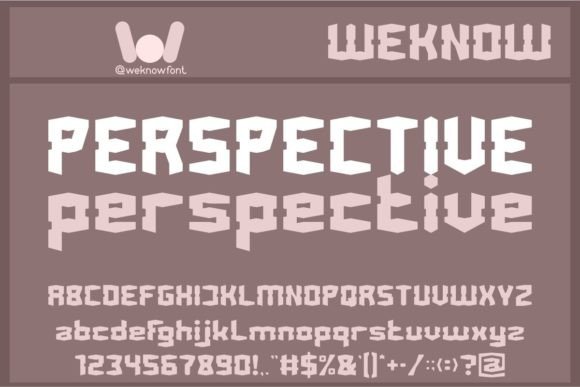
To evaluate Perspective effectively, one must first understand its structural intent. Unlike organic or humanist sans-serifs that prioritize fluidity and warmth, Perspective is engineered with an urban sophistication in mind. Its design language draws heavily from the rigid lines of futuristic architecture and the precise movements of robotics. This results in a typeface that feels less like a tool for body text and more like a structural element in itself.
The "techno sci-fi" aesthetic mentioned in its creation is not merely a stylistic flourish; it is a functional characteristic. The letterforms often feature sharp angles, geometric counterforms, and a sense of forward momentum. This makes Perspective particularly effective when the goal is to evoke innovation, speed, or a high-tech environment. However, this distinctiveness comes with tradeoffs. The very features that make it stand out in a headline can hinder legibility in smaller sizes or dense paragraphs. Therefore, Perspective is best viewed as a display font, perfectly tailored for headlines rather than extended reading material.
Comparing Perspective to Broader Typographic Categories
When selecting a typeface, professionals often weigh options against established categories such as Geometric Sans, Neo-Grotesque, or Blackletter. Perspective occupies a unique space that overlaps with Geometric Sans but diverges significantly in its application and mood.
- Geometric Sans vs. Perspective: Standard geometric fonts (like Futura) rely on perfect circles and triangles to create a neutral, clean look. While they are modern, they often lack the aggressive, futuristic edge that Perspective offers. If a project requires a timeless, neutral modernism, a standard geometric sans may be superior. If the brief demands a specific "cyberpunk" or "future-tech" vibe, Perspective provides a more immediate visual cue.
- Blackletter and Gothic Styles: Some designers turn to stylized blackletter fonts for a dramatic effect. However, these often carry historical baggage associated with medieval manuscripts. Perspective achieves a similar level of visual impact and drama but anchors it firmly in a contemporary, forward-looking context. It avoids the archaic connotations while maintaining high contrast and visual weight.
- Display Fonts for Tech: There are numerous display fonts designed for the technology sector. Many lean towards ultra-thin weights or extreme minimalism. Perspective distinguishes itself through its "urban sophistication." It feels heavier and more grounded, suitable for environments that need to convey stability alongside innovation, such as corporate branding for infrastructure or heavy industry.
Strengths and Limitations in Brand Identity
For corporate and brand identities, the choice of typography is a strategic decision. Perspective offers a distinct feel that can help a brand position itself at the forefront of innovation. Its strengths lie in its ability to command attention and establish a tone of authority and modernity.
Key Strengths:
- High Impact Headlines: The font's structure ensures that headlines pop, making it ideal for cover pages, website hero sections, and billboards.
- Industry Alignment: It naturally aligns with sectors like fintech, automotive, aerospace, and software development, where "future-proofing" is a key marketing message.
- Versatility in Styling: The robust nature of the letters allows for various treatments, including kerning adjustments and layering, without losing structural integrity.
Limitations and Tradeoffs:
Despite its strengths, Perspective is not a universal solution. Its highly stylized nature means it should be used sparingly. Overuse can lead to visual fatigue, causing the audience to perceive the brand as trying too hard rather than simply being innovative. Furthermore, because it is optimized for headlines, pairing it with a complementary body font is non-negotiable. Using Perspective for long-form content would likely result in poor readability and a negative user experience. When evaluating alternatives, if a project requires a single font family to handle both headlines and body text, a more versatile neo-grotesque might be a safer, more practical choice.
Practical Applications Across Media
The versatility of Perspective extends across various media formats, provided the usage aligns with its display capabilities. Its utility varies depending on the medium and the intended audience engagement.
Print and Editorial Design
In the realm of magazines, books, and comic ventures, Perspective serves as a powerful narrative device. For a magazine focused on urban planning or technology trends, using Perspective for section headers can immediately set the thematic tone. In comic books and graphic novels, the font can be utilized for sound effects, chapter titles, or villainous monologues to enhance the sci-fi atmosphere. However, in traditional literary books, its use should be restricted to the cover or major chapter breaks to avoid disrupting the reader's flow.
Digital and Social Media
Social media handles on platforms like YouTube and Instagram require immediate visual recognition. Perspective is well-suited for creating thumbnails, channel banners, and overlay text in video content. Its bold strokes ensure that text remains legible even on small mobile screens when used as a short title or call to action. For animated content and cartoons, the font's dynamic structure complements motion graphics, adding an innovative touch to intros and outros. Designers should note that on social media, the font works best when paired with high-contrast backgrounds to maximize its robotic precision.
Entertainment and Gaming
The gaming and movie industries frequently seek typography that evokes specific worlds. Perspective fits seamlessly into poster design for sci-fi films, video game UI elements, and promotional materials for music festivals with electronic themes. In these contexts, the font acts as a visual shorthand for the genre, helping potential audiences instantly identify the content's nature. It bridges the gap between abstract concepts of the future and tangible design elements.
Decision Factors: When to Choose or Avoid
Making an informed decision about Perspective requires a clear assessment of the project's goals. It is not merely about whether the font looks good, but whether it communicates the right message efficiently.
Choose Perspective when:
- The project requires a strong statement of futurism, technology, or urban modernity.
- The primary use case is for headlines, logos, or short phrases where impact is prioritized over reading endurance.
- The target audience appreciates high-design aesthetics and is familiar with tech-centric visual languages.
- You have a complementary body font ready to handle the bulk of the text.
Consider Alternatives when:
- The project requires extensive body text or long-form reading.
- The brand identity aims for warmth, approachability, or organic growth (e.g., healthcare, lifestyle, artisanal goods).
- The budget does not allow for custom pairings or extensive typesetting work to manage the font's quirks.
- The audience demographic is older or less tech-savvy, where clarity and tradition may outweigh futuristic styling.
Conclusion on Strategic Implementation
Perspective stands as a tribute to the future, offering a unique blend of robotic precision and urban sophistication. It is a tool designed to breathe life into design projects that aim to strike a chord with a modern, forward-thinking audience. By understanding its strengths as a display font and recognizing its limitations in long-form applications, designers can leverage its alluring dynamism effectively. Whether powering creative flare in a gaming poster or defining a corporate identity in the tech sector, Perspective offers a distinct voice. However, like any specialized tool, its value lies in appropriate application. Evaluating it against the specific needs of your project ensures that the chosen typography enhances the message rather than overshadowing it.