Evaluating Blow Grafo: A Practical Guide to Urban Display Typography
In the realm of digital and print design, typography often serves as the primary vehicle for conveying tone and atmosphere. For projects requiring an immediate connection to street culture, urban grit, or rebellious energy, standard sans-serif or serif fonts frequently fall short. This is where specialized display fonts like Blow Grafo enter the conversation. Designed to mimic the raw essence of graffiti art, Blow Grafo offers a robust and dynamic character set that aims to replicate the visual language of city walls without requiring a spray can. However, integrating such a stylized typeface into a professional workflow requires a clear understanding of its capabilities, limitations, and how it compares to other typographic approaches.
Defining the Aesthetic: What Makes Blow Grafo Distinct
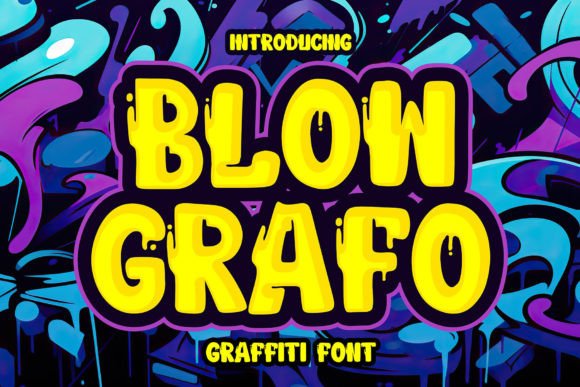
At its core, Blow Grafo is a display font engineered to capture the spontaneous and expressive nature of graffiti. Unlike traditional typefaces that prioritize uniformity and readability across long passages, Blow Grafo focuses on impact. Its characters are imbued with an edgy, city-vibe aesthetic, featuring irregular edges, varying stroke widths, and a sense of motion that suggests the quick, fluid movements of a hand holding a marker or spray paint.
The distinctiveness of Blow Grafo lies in its ability to balance legibility with artistic flair. While many graffiti-style fonts sacrifice clarity entirely for the sake of style, resulting in text that is more decorative than functional, Blow Grafo maintains a level of structural integrity. The characters are designed to be expressive yet recognizable, making them suitable for headlines, logos, and short phrases where the message needs to stand out instantly. This "authentic flavor" of street art allows designers to inject a memorable edge into their work, solidifying the persona of a brand or project as bold and contemporary.
Comparing Stylized Fonts: Blow Grafo vs. Traditional Alternatives
When selecting a typeface for a project, designers often weigh the choice between custom illustration and pre-made font files. Custom hand-lettering offers the ultimate in uniqueness but comes with significant time and cost implications. In contrast, using a font like Blow Grafo provides a middle ground. It delivers the look of custom street art with the efficiency of a digital asset.
Compared to generic "grunge" or "distressed" fonts available in standard operating system libraries, Blow Grafo offers a higher degree of refinement. Many free alternatives tend to rely on simple texture overlays or random pixelation to simulate wear and tear, which can look dated or low-resolution upon closer inspection. Blow Grafo, by comparison, utilizes vector-based character construction that ensures scalability. Whether used on a small social media graphic or a large-scale billboard, the lines remain crisp, preserving the intended dynamic quality of the design.
Furthermore, when compared to other commercial graffiti fonts, Blow Grafo distinguishes itself through its specific stylistic choices. Some competitors lean heavily into the "wildstyle" genre, creating intricate, interlocking letters that are notoriously difficult to read. Others may focus on bubble letters or tag styles that feel juvenile. Blow Grafo occupies a versatile space between these extremes, offering a robust character set that feels mature enough for clothing lines and posters while retaining the necessary attitude for street art applications.
Strengths and Tradeoffs in Design Application
Understanding the strengths and tradeoffs of any tool is essential for effective decision-making. The primary strength of Blow Grafo is its versatility within the urban aesthetic category. It serves as a powerful medium to elevate projects that need to communicate energy, youth culture, or counter-culture values. Its distinctive style gives designs a memorable edge, ensuring they do not blend into the background of a crowded visual landscape.
However, there are inherent tradeoffs. Because Blow Grafo is a display font, it is not intended for body copy. Attempting to use it for paragraphs of text will result in poor readability and visual fatigue. The very features that make it attractive—the irregular shapes and dynamic strokes—become obstacles when applied to extended reading material. Designers must recognize this limitation and reserve Blow Grafo for headlines, titles, logos, and accent text.
Another consideration is the context of the audience. While the edgy aesthetic appeals strongly to younger demographics or niche markets interested in streetwear and urban art, it may clash with brands aiming for corporate professionalism, luxury minimalism, or traditional elegance. In these scenarios, the "raw essence" of the font might undermine the desired brand message rather than enhance it.
Best-Fit Situations and Decision Factors
Determining whether Blow Grafo is the right choice depends largely on the specific goals of the project. It is an ideal candidate for industries and creative endeavors that thrive on visual disruption and cultural relevance. For instance, clothing lines often utilize such fonts to create bold graphics for t-shirts and hoodies, where the text acts as a central design element. Similarly, event posters for music festivals, skateboarding competitions, or art exhibitions benefit from the high-impact nature of the typeface.
Designers should also consider the medium of delivery. Blow Grafo's robust characters hold up well in both digital and print formats. In digital environments, the font can be animated or layered to enhance the feeling of movement. In print, particularly on textured paper or fabric, the font's inherent "grit" complements the physical material, adding depth to the final product.
Conversely, there are situations where readers may need another option. If a project requires a multi-font hierarchy where the main title needs to pair seamlessly with a highly readable serif body text, the extreme stylistic nature of Blow Grafo might create too much visual dissonance. Additionally, if the target demographic is older or more conservative, a subtler approach to typography might be more effective. In cases where the message requires absolute clarity and neutrality, a standard geometric or humanist sans-serif would be a superior choice over a graffiti-inspired alternative.
Practical Implementation Strategies
To maximize the effectiveness of Blow Grafo, designers should employ strategic implementation techniques. Pairing the font with clean, neutral backgrounds can help the complex characters breathe, preventing the design from becoming visually cluttered. Using ample whitespace around the text allows the dynamic nature of the letters to shine without competing with other graphical elements.
Color selection is another critical factor. While black and white is a classic combination for street art, experimenting with high-contrast color palettes can further amplify the visual appeal. Neon accents against dark backgrounds, for example, can mimic the glow of urban nightscapes, reinforcing the city-vibe aesthetic. However, designers should avoid over-saturating the design; the font itself carries significant visual weight, so the surrounding elements should support rather than overwhelm it.
Furthermore, leveraging the font's expressive style involves thinking about layout. Instead of aligning text strictly horizontally, designers might experiment with slight rotations or staggered baselines to mimic the organic placement of graffiti on a wall. This approach enhances the authenticity of the design, making it feel less like a digital template and more like a genuine piece of urban expression.
Conclusion: Making an Informed Choice
Blow Grafo represents a significant tool for designers seeking to channel the vibrant spirit of graffiti into their works. Its ability to combine authentic street art aesthetics with the practicality of a digital font makes it a superb choice for specific applications. However, like any specialized tool, it requires thoughtful application. By understanding its strengths in creating impact and its limitations regarding readability and context, designers can make informed decisions about when to deploy it.
Ultimately, the value of Blow Grafo lies not just in its visual style, but in its capacity to communicate a specific cultural narrative. When used appropriately, it amplifies the visual appeal of projects ranging from street art installations to fashion branding. For those evaluating options, the key is to match the font's energetic persona with a project that demands that same level of intensity and authenticity.