Evaluating Rawopa: A Practical Guide to Its Design Strengths and Limitations
In the crowded landscape of digital typography, finding a font that balances whimsy with legibility is often a challenge for designers. Rawopa has emerged as a distinct option within the playful category, offering a specific aesthetic that appeals to projects requiring a cheery, approachable accent. However, like any typeface, it is not a universal solution. Understanding where Rawopa excels and where it may fall short is essential for making an informed design decision. This guide explores the characteristics of Rawopa, compares its utility against broader typographic categories, and outlines the specific scenarios where it serves as the optimal choice.
Defining the Character of Rawopa
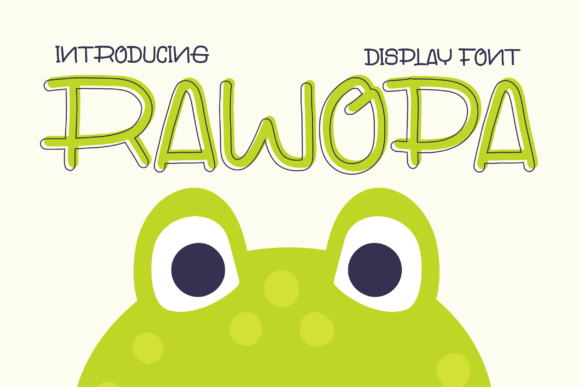
At its core, Rawopa is defined by its organic, hand-drawn quality. Unlike geometric sans-serifs that rely on mathematical precision, or traditional serifs that evoke history and formality, Rawopa leans into irregularity. The letterforms feature soft curves, varying stroke widths, and a slightly bouncy baseline that mimics the natural movement of a pen or marker. This creates an immediate visual association with creativity, youthfulness, and friendliness.
What distinguishes Rawopa from generic "cute" fonts is its structural integrity. While many display fonts sacrifice readability for style, Rawopa maintains a level of clarity that allows it to function effectively in short bursts of text. The character spacing is generally open, preventing the letters from becoming a tangled mess, which is a common pitfall in highly decorative typefaces. This balance makes it a versatile tool for adding personality without overwhelming the viewer.
When evaluating a font like Rawopa, it is important to consider its emotional resonance. Typography is not just about conveying information; it is about setting a tone. Rawopa signals warmth and accessibility. It suggests that a brand or project is human-centric and unpretentious. For audiences aged 20 to 50, who are increasingly skeptical of corporate stiffness, this authentic feel can be a significant asset in establishing trust and engagement.
Comparing Rawopa to Standard Display Fonts
To understand the value proposition of Rawopa, it helps to compare it with other common approaches to playful typography. Many designers turn to standard rounded sans-serifs when they need a friendly look. These fonts are clean and modern but often lack the unique character required to stand out in a saturated market. They can feel safe and predictable. In contrast, Rawopa introduces a layer of artistic flair that breaks the monotony of standard grid-based designs.
Another comparison point is the category of "handwritten" scripts. True script fonts often mimic cursive writing, which can be difficult to read at smaller sizes or in all-caps formats. Rawopa occupies a middle ground. It retains the charm of handwriting but uses block-like structures that improve legibility. This makes it more suitable for headlines and titles than a flowing script might be, while still offering more personality than a standard sans-serif.
Furthermore, when considering alternatives, one must weigh the consistency of the font family. Some playful fonts come in extensive families with multiple weights (light, regular, bold, black) and styles (italic, condensed). If Rawopa is available only in a single weight or limited style set, this could be a tradeoff compared to more comprehensive font families. Designers should assess whether the project requires a hierarchy of text weights or if a single, strong display font will suffice for the intended application.
Strengths and Tradeoffs in Application
The primary strength of Rawopa lies in its ability to grab attention quickly. In environments like social media graphics, event posters, or product packaging, the first few seconds are critical. The distinctive shape of the letters acts as a visual hook. However, this same distinctiveness becomes a limitation when applied to long-form content. Using Rawopa for body text in a blog post or a lengthy article would likely cause reader fatigue due to the irregular shapes and high cognitive load required to decode the characters.
A practical tradeoff involves versatility across different mediums. While Rawopa looks excellent on digital screens and printed merchandise, its intricate details might get lost in very small print runs or low-resolution displays. Designers need to evaluate the final output medium carefully. If the design will be scaled down significantly, a simpler, more robust typeface might be a safer alternative. Conversely, for large-format applications like billboards or book covers, the nuances of Rawopa can shine, adding texture and depth to the composition.
Ideal Use Cases for Rawopa
Determining when to use Rawopa requires aligning the font's personality with the project's goals. It is particularly well-suited for industries that prioritize fun, creativity, and community. For example, children's book covers benefit immensely from the font's inviting nature, immediately signaling to young readers and parents that the content is engaging and age-appropriate. Similarly, educational materials for younger demographics can leverage Rawopa to make learning feel less rigid and more interactive.
In the realm of packaging, Rawopa works exceptionally well for products targeting lifestyle and leisure. Think of artisanal snacks, craft beverages, or handmade goods where the brand story emphasizes authenticity and joy. The font complements illustrations and vibrant color palettes, creating a cohesive visual identity that feels curated rather than mass-produced. It helps the product stand out on a shelf filled with competitors using sterile, minimalist typography.
Merchandise and logotypes are another strong fit. A logo designed with Rawopa can convey a sense of approachability, making a startup or local business feel like a neighbor rather than a corporation. T-shirts, tote bags, and stickers often utilize this style because the casual aesthetic translates well to wearable art. The font encourages a sense of belonging and playfulness, which is central to modern branding strategies focused on community building.
When to Consider Alternatives
Despite its strengths, there are clear situations where Rawopa is not the right choice. Projects requiring a tone of authority, seriousness, or luxury should avoid this typeface. Legal documents, financial reports, medical communications, and high-end fashion brands typically rely on serif or clean sans-serif fonts to convey professionalism and stability. Introducing Rawopa into these contexts could undermine the credibility of the message, creating a dissonance between the visual style and the content's gravity.
Additionally, if a design requires strict alignment and uniformity, Rawopa may present challenges. Its organic nature means that letters do not always sit perfectly on a baseline, and kerning can be unpredictable. For designs that demand pixel-perfect precision, such as technical diagrams or complex data visualizations, a more structured font is necessary. In these cases, the "imperfections" that give Rawopa its charm become functional liabilities.
Designers should also consider the longevity of the trend. While playful typography remains popular, specific styles can date quickly. If a brand aims for a timeless identity that will remain relevant for decades, investing in a classic typeface might be a wiser long-term strategy. Rawopa is excellent for campaigns, seasonal promotions, or brands that embrace evolution and change, but it may require updates sooner than a neutral, foundational font.
Decision Factors for Selecting Rawopa
Ultimately, the decision to use Rawopa comes down to a strategic evaluation of the project's needs. Designers should ask themselves three key questions: Does the project require a human, friendly touch? Is the text primarily used for headlines and accents rather than body copy? Does the brand identity align with values of creativity and joy?
If the answer to these questions is yes, Rawopa offers a compelling solution that combines aesthetic appeal with functional readability. It provides a way to inject personality into a design without sacrificing clarity. However, if the project demands neutrality, extreme scalability, or a formal tone, exploring other categories of typography is advisable. By understanding the specific attributes of Rawopa and how it fits into the broader ecosystem of design resources, professionals can make choices that enhance their work rather than distract from it.
In conclusion, Rawopa is a powerful tool for specific design challenges, offering a unique blend of playfulness and structure. Its effectiveness depends entirely on context. When used thoughtfully, it elevates book covers, posters, packaging, and logos, creating memorable visual experiences. When used indiscriminately, it can dilute a message. As with any design resource, the key lies in intentional selection and a clear understanding of the audience and objectives.