Evaluating Death Zombie: A Comprehensive Guide to a Unique Horror Typeface
In the realm of digital typography, selecting the right font is often the difference between a design that resonates and one that falls flat. For designers working within the horror, fantasy, or seasonal event sectors, Death Zombie has emerged as a distinct option worthy of consideration. Unlike generic "scary" fonts that rely on clichéd dripping effects or jagged edges, Death Zombie offers a balanced approach to the macabre aesthetic. It combines the visceral impact required for horror themes with the structural integrity needed for professional applications. This evaluation explores what makes Death Zombie unique, how it compares to other options in its category, and when it serves as the most effective tool for your design projects.
The Distinctive Character of Death Zombie
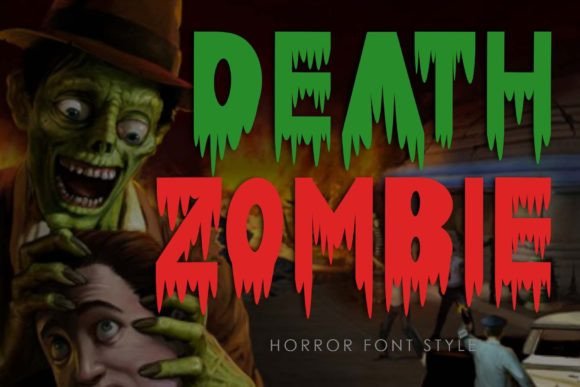
At its core, Death Zombie is designed to evoke the atmosphere of decay and unease without sacrificing legibility. Many horror-themed typefaces fail because they prioritize style over function, rendering them unreadable in anything but large headlines. Death Zombie addresses this common pitfall by maintaining clear character definitions even in smaller sizes. The font's architecture features irregular baselines and distressed textures that suggest organic deterioration, fitting perfectly with zombie apocalypse narratives or Halloween festivities.
What truly sets Death Zombie apart is its comprehensive character set. A frequent limitation in niche decorative fonts is the lack of complete glyph coverage. Designers often find themselves unable to include numbers, specific punctuation marks, or foreign characters, forcing them to switch fonts mid-project and break visual consistency. Death Zombie resolves this by including full uppercase and lowercase alphabets, numerals, and a robust selection of punctuation. Furthermore, its multilingual support allows for broader application, making it suitable for international campaigns or projects requiring non-Latin scripts. This level of completeness transforms it from a mere novelty into a functional asset for branding and editorial work.
Comparing Death Zombie to Standard Horror Alternatives
When evaluating typography for horror-related projects, designers typically encounter three main categories: the "dripping blood" style, the "grungy texture" style, and the "clean gothic" style. Each has its place, but they come with significant tradeoffs. The dripping style is instantly recognizable but often looks amateurish when used for body text or complex layouts. Clean gothic fonts offer readability but can feel too formal or historical, lacking the immediate visceral punch required for modern horror.
Death Zombie occupies a middle ground that leans towards the grungy texture aesthetic but with a more refined execution. Compared to free, low-resolution alternatives found on generic download sites, Death Zombie provides higher vector quality, ensuring crisp edges at any scale. While some competing fonts might offer similar visual themes, they often lack the extensive ligature support or the nuanced variation in stroke weight that gives Death Zombie its depth. In a side-by-side comparison, Death Zombie tends to hold up better under scrutiny, particularly when printed on physical media where pixelation or blurring can ruin the effect of cheaper alternatives.
Furthermore, the versatility of Death Zombie exceeds many single-purpose horror fonts. Where another font might be strictly limited to a poster headline, Death Zombie's inclusion of numerals and punctuation allows it to be used for dates, ticket prices, and credits in movie posters or event banners. This reduces the need for multiple font pairings, streamlining the design process and maintaining a cohesive visual identity.
Strengths and Tradeoffs in Practical Application
Understanding the strengths and limitations of any typeface is crucial for effective design. The primary strength of Death Zombie lies in its thematic consistency and technical completeness. Its ability to convey a sense of dread while remaining readable makes it an excellent choice for titles, logos, and short paragraphs. The multilingual capability is a significant advantage for global brands or events targeting diverse audiences, a feature often overlooked in specialized genre fonts.
However, there are tradeoffs to consider. Because Death Zombie is so stylized, it is not intended for long-form reading. Using it for book chapters, lengthy articles, or dense informational content would likely result in reader fatigue. The irregular shapes and distressed details, while aesthetically pleasing, can hinder quick scanning if overused. Therefore, it functions best as a display font rather than a body text solution. Designers must also be mindful of color contrast; the textured nature of the font requires high-contrast backgrounds to ensure the details do not get lost, particularly in print materials with lower resolution capabilities.
Another factor is the learning curve for implementation. While the font itself is user-friendly, maximizing its potential often requires adjusting kerning manually. The irregular spacing inherent in the design means that automatic spacing algorithms may not always produce the desired visual rhythm. This demands a bit more time and attention from the designer compared to standard sans-serif or serif fonts. However, for those willing to invest the effort, the payoff is a highly customized and impactful look that stands out in crowded markets.
Ideal Use Cases for Death Zombie
Determining when to deploy Death Zombie involves matching the font's attributes to the project's goals. It is exceptionally well-suited for Halloween events, where the theme aligns perfectly with the font's aesthetic. From party invitations to venue signage, Death Zombie captures the spirit of the holiday without looking like a clip-art afterthought. Similarly, for horror movies and trailers, the font works effectively for title cards and end credits, providing an immediate tonal cue to the audience.
Beyond the obvious horror applications, Death Zombie finds utility in comics and cartoons that feature supernatural or dark humor elements. The exaggerated letterforms add personality to speech bubbles and sound effects, enhancing the narrative experience. In the realm of branding, it is ideal for businesses such as escape rooms, haunted houses, or alternative fashion labels that want to project a bold, edgy image. The font's ability to handle logos and stickers effectively makes it a strong candidate for merchandise and promotional materials.
Interestingly, the font also has a place in Christmas designs, specifically for those with a "spooky festive" twist, such as Victorian-era ghost stories or modern horror-comedy holiday specials. Its versatility allows it to bridge the gap between seasonal cheer and macabre intrigue. Additionally, for posters and banners promoting concerts, festivals, or art exhibits with a dark theme, Death Zombie offers the visual weight necessary to grab attention from a distance.
Decision Factors: When to Choose Another Option
Despite its strengths, Death Zombie is not a universal solution. If your project requires a minimalist, clean, or corporate aesthetic, this font is likely a poor fit. Its heavy styling can clash with modern, sleek designs that rely on negative space and simplicity. For instance, a tech startup or a medical organization should avoid using Death Zombie, as the connotations of decay and horror would undermine trust and professionalism.
Similarly, if the primary goal is maximum legibility for accessibility purposes, a standard sans-serif font may be a safer choice. While Death Zombie is readable for display purposes, it does not meet the same accessibility standards as plain typefaces for users with visual impairments. In situations where the audience includes children who may be sensitive to scary imagery, or in educational contexts, a less intense font might be more appropriate.
Finally, consider the medium. If you are working with extremely low-resolution digital displays or cheap paper stock, the fine details of Death Zombie might not reproduce well. In these scenarios, a bolder, simpler font with fewer intricate textures could yield better results. Evaluating the technical constraints of your output medium is just as important as considering the aesthetic requirements.
Final Thoughts on Integration and Value
Choosing the right typeface is a strategic decision that impacts the overall success of a design. Death Zombie offers a compelling blend of thematic depth and functional utility, distinguishing itself from the sea of generic horror fonts available online. Its comprehensive character set, including multilingual support and full punctuation, makes it a robust tool for professional designers who need reliability alongside creativity.
By understanding its strengths—such as its suitability for posters, branding, and event marketing—and acknowledging its limitations regarding long-form text and minimalistic contexts, designers can make informed choices. Whether you are crafting a logo for a new comic series, designing a banner for a Halloween festival, or creating a sticker line for a horror-themed brand, Death Zombie provides a distinctive voice. It is not merely a decoration but a functional element that enhances the narrative of your project. As with any design resource, the key lies in knowing when to apply it and when to explore alternatives that better suit the specific needs of your audience and medium.