Hello Boho: A Practical Evaluation of Style, Versatility, and Design Fit
In the landscape of digital typography, finding a font that balances personality with readability is often a challenge. Hello Boho has emerged as a significant option for designers seeking a display typeface that feels both organic and approachable. It is not merely a decorative element but a functional tool that brings a specific warmth to visual projects. For professionals and hobbyists alike, understanding where this font excels and where it may fall short is essential for making informed design choices.
This evaluation explores the characteristics of Hello Boho, compares its utility against broader typographic categories, and outlines the specific scenarios where it serves as an ideal solution versus when alternative approaches might be more effective.
Defining the Aesthetic: What Makes Hello Boho Distinct
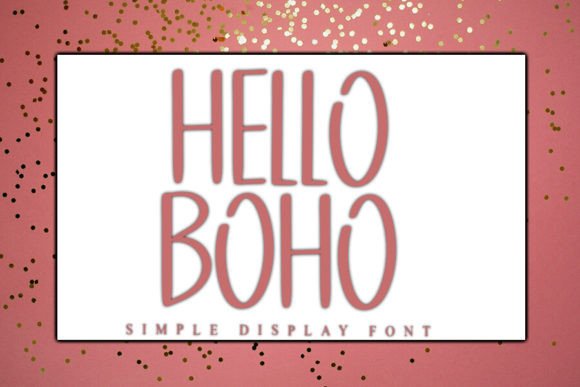
At its core, Hello Boho is a sweet and friendly display font. Its defining characteristic lies in its natural and unique style, which mimics the fluidity of hand-lettering while maintaining the consistency required for digital rendering. Unlike rigid geometric sans-serifs or traditional serifs, Hello Boho incorporates subtle irregularities in stroke weight and curve termination. These imperfections are intentional; they create a sense of human touch that resonates well with audiences looking for authenticity.
The "boho" influence in the name refers to the bohemian aesthetic—relaxed, artistic, and free-spirited. This is reflected in the letterforms, which often feature soft edges and a slightly whimsical structure. The font avoids the harshness of sharp angles, opting instead for rounded terminals and open counters. This makes it incredibly fitting to a large pool of designs, particularly those aiming to evoke feelings of comfort, creativity, or nostalgia.
However, distinctiveness comes with constraints. Because the style is so pronounced, Hello Boho is primarily a display font. It is designed to grab attention at larger sizes rather than sustain reading over long paragraphs. Recognizing this limitation is the first step in evaluating whether it fits a specific project's needs.
Comparing Display Fonts: Context and Alternatives
When considering Hello Boho, it is helpful to view it within the broader context of display typography. The market offers various alternatives, ranging from highly structured script fonts to bold, modern brush styles. Each category serves a different communicative purpose.
Structured Scripts vs. Organic Displays
Many script fonts prioritize legibility and uniformity, often resembling calligraphy practiced with a consistent nib. In contrast, Hello Boho leans towards an organic, hand-drawn feel. If a project requires a formal yet elegant look, such as a wedding invitation requiring high-end sophistication, a structured script might be preferable. However, if the goal is to convey a casual, welcoming vibe, the natural style of Hello Boho often outperforms stricter scripts.
Modern Brush Styles
Contemporary brush fonts often feature dramatic variations in stroke width and dynamic movement. While these can be visually striking, they sometimes sacrifice clarity. Hello Boho strikes a middle ground; it retains enough variation to look handcrafted but maintains a level of stability that ensures characters remain recognizable even at moderate sizes. This balance makes it a versatile choice compared to more erratic brush alternatives.
Geometric Sans-Serifs
For brands prioritizing minimalism and corporate identity, geometric sans-serifs are the standard. They offer neutrality and maximum readability. Hello Boho is the antithesis of this approach. Where a sans-serif aims to disappear into the background, Hello Boho demands attention. Choosing between them depends entirely on the brand voice: one seeks to inform efficiently, while the other seeks to connect emotionally.
Evaluating Readability and Legibility
A critical factor in font selection is how easily the text can be read. Display fonts like Hello Boho are generally less legible than body fonts. The unique curves and stylistic flourishes can slow down reading speed. Therefore, using Hello Boho for body copy in a blog post or article is typically not recommended. Instead, it shines when used for headlines, logos, short quotes, or packaging labels where the message is brief and impactful.
Designers should test the font at the intended size before committing. A character that looks charming at 72 points may become indistinct at 14 points. This tradeoff between style and function is a common consideration when working with any expressive typeface.
Best-Fit Situations and Use Cases
The versatility of Hello Boho allows it to adapt to various creative industries, provided the application aligns with its friendly nature. Here are several scenarios where this font proves particularly effective:
- Lifestyle and Wellness Branding: Brands focused on yoga, organic products, or mental wellness often benefit from the natural, non-threatening aesthetic of Hello Boho. It communicates care and approachability without feeling clinical.
- Event Invitations: For baby showers, bridal showers, or casual birthday parties, the sweet and friendly tone sets the right expectation for guests. It suggests a relaxed atmosphere rather than a formal gala.
- Social Media Graphics: In the fast-paced environment of social media, grabbing attention quickly is vital. Hello Boho works well for overlay text on images, Instagram stories, and Pinterest pins where a personal touch enhances engagement.
- Merchandise and Packaging: On t-shirts, tote bags, or product labels, the font adds a handmade quality that appeals to consumers seeking unique, artisanal goods.
In each of these cases, the font acts as a visual cue that reinforces the brand's values. The only limit is your imagination, but practical application requires matching the font's energy with the medium's requirements.
Tradeoffs and Decision Factors
While Hello Boho offers distinct advantages, it is not a universal solution. Evaluating its suitability involves weighing specific tradeoffs against project goals.
Limited Language Support
Many display fonts, including those in the boho category, may have limited character sets. They might lack full support for extended Latin characters, diacritics, or special symbols. If a project requires multilingual content or complex formatting, this could be a significant hurdle. Designers must verify the glyph coverage before integrating the font into international campaigns.
Scalability Issues
As mentioned, the intricate details of Hello Boho can get lost at small sizes. If a design system requires the same font family for headers, subheaders, and footnotes, this font may not be sustainable. It often pairs best with a neutral sans-serif for body text, creating a hierarchy that balances style with functionality.
Tone Consistency
The "sweet" nature of the font can clash with serious or urgent messaging. Using Hello Boho for a financial report, a legal notice, or a crisis communication would likely undermine the gravity of the content. The emotional tone of the typeface must align with the subject matter.
When to Choose Another Option
There are clear instances where selecting an alternative to Hello Boho is the prudent decision. Understanding these boundaries prevents design missteps.
If the primary goal is information density, a serif or sans-serif body font is superior. When readers need to process large amounts of data quickly, the decorative elements of Hello Boho become a distraction. Similarly, for brands aiming to project authority, precision, or technological innovation, a cleaner, more geometric typeface will likely serve better.
Furthermore, if the design relies heavily on color contrast and minimal shapes, a heavy display font might overwhelm the layout. In minimalist designs, simplicity is key. Adding a font with too much personality can clutter the visual space. In such cases, a simpler script or a clean slab serif might achieve the desired effect without competing for attention.
Practical Implementation Strategies
To maximize the potential of Hello Boho, consider pairing it strategically. A common and effective technique is to use Hello Boho for headlines and pair it with a highly readable sans-serif for the supporting text. This creates a visual rhythm where the display font provides the hook, and the body font delivers the substance.
Color also plays a crucial role. Because the font has a soft, friendly appearance, it pairs well with earth tones, pastels, and muted palettes. High-contrast combinations, such as black on white, work, but softer contrasts can enhance the organic feel. Avoid using it in all-caps unless necessary, as this can distort the natural flow of the letterforms and reduce legibility.
Ultimately, the decision to use Hello Boho should be driven by the message you wish to convey. If your goal is to invite, inspire, and connect on a human level, this font offers a powerful tool. By understanding its strengths, limitations, and appropriate contexts, designers can leverage its unique style to create compelling and cohesive visual experiences.