Vicky Chow: A Practical Evaluation of the 3D Balloon Type Style
In the realm of digital typography, specific font styles often emerge to address particular emotional needs within a design project. Vicky Chow is a distinct example of this phenomenon, characterized as a cute and adorable chubby 3D balloon font. It is designed specifically to fill a layout with cheerfulness, offering a prominent visual impact that flat or traditional serif fonts cannot easily replicate. For designers, marketers, and content creators aged 20 to 50 who are evaluating typographic assets for their next campaign, understanding the utility and limitations of such a specialized typeface is crucial. This analysis explores what makes Vicky Chow unique, how it compares to broader categories of display fonts, and when its application yields the best results versus when it might detract from a message.
Defining the Visual Language of Vicky Chow
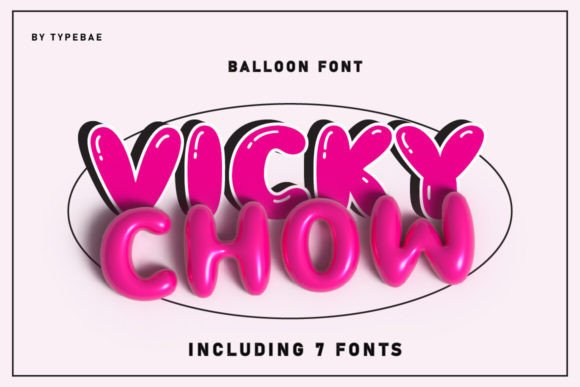
To evaluate Vicky Chow effectively, one must first understand its core aesthetic attributes. The font mimics the physical properties of an inflated balloon, utilizing exaggerated curves, rounded terminals, and simulated three-dimensional shading to create depth. Unlike standard sans-serif fonts that prioritize legibility and neutrality, Vicky Chow prioritizes personality and texture. The "chubby" nature of the characters implies softness and approachability, while the 3D rendering adds a tactile quality that suggests playfulness.
This style falls squarely into the category of novelty or display typefaces. Its primary function is not body text but rather headline emphasis, logo creation, or decorative accents. When a designer selects Vicky Chow, they are making a deliberate choice to inject a sense of whimsy and high energy into a composition. The visual weight of the font is significant; it commands attention immediately upon viewing. This makes it a powerful tool for grabbing eyes in crowded digital environments, such as social media graphics or event posters, where the goal is to evoke an instant emotional response of joy or excitement.
Comparative Analysis: Vicky Chow vs. Standard Display Fonts
When comparing Vicky Chow to other options in the display font market, several distinctions become apparent. Most standard display fonts, even those intended to be friendly, rely on two-dimensional vector shapes. They may have rounded edges or bold strokes, but they lack the volumetric illusion that defines Vicky Chow. This difference is critical when considering the medium of delivery. In print, a 3D effect can sometimes be achieved through layering or embossing, but in digital formats, a pre-rendered 3D font like Vicky Chow offers immediate depth without complex CSS or graphic manipulation.
However, this comparison also reveals trade-offs. Traditional rounded sans-serifs often offer better scalability and readability at smaller sizes. Because Vicky Chow incorporates internal shading and drop shadows as part of the glyph structure, reducing the font size can lead to a loss of detail or a muddy appearance. In contrast, simpler geometric fonts maintain clarity across a wider range of resolutions. Therefore, while Vicky Chow excels in large-format headlines, it is less versatile than minimalist alternatives when space is constrained or when the text must be read quickly from a distance.
Another point of comparison involves the emotional spectrum. While many "cute" fonts exist, they vary significantly in tone. Some lean towards the childish or cartoonish, which can undermine credibility in professional settings. Vicky Chow strikes a balance by maintaining a polished, rendered look that feels modern rather than dated. It avoids the jagged, hand-drawn aesthetic of some marker-style fonts, opting instead for a smooth, manufactured finish that aligns well with contemporary branding trends focused on friendliness and accessibility.
Strengths and Strategic Use Cases
The strengths of Vicky Chow are most evident in scenarios requiring a cheerful and prominent impression. Its ability to convey warmth makes it an excellent fit for industries centered around family, education, entertainment, and lifestyle. For instance, a birthday party invitation, a children's book cover, or a promotional banner for a summer festival would benefit immensely from the font's inherent optimism. In these contexts, the font does more than communicate information; it sets the mood before the viewer reads a single word.
Furthermore, the 3D aspect of the font allows it to stand out against flat backgrounds. In a sea of minimalistic web design, a headline rendered in Vicky Chow creates a focal point that breaks the monotony. This is particularly useful for call-to-action buttons or hero sections where the objective is to drive engagement. The perceived "pop" of the letters suggests interactivity and fun, encouraging users to pause and engage with the content.
Designers also find value in the font's versatility regarding color. Because the base shape is defined by volume, applying gradients or solid colors to the different "facets" of the letters can create dynamic effects. This flexibility allows for customization that aligns with specific brand palettes while retaining the signature chubby aesthetic. Whether used in vibrant neon tones for a nightlife event or soft pastels for a baby shower, the underlying structure of Vicky Chow remains robust enough to support various color treatments.
Limitations and Decision Factors
Despite its appeal, Vicky Chow is not a universal solution. The very traits that make it distinctive also impose limitations. The primary constraint is readability. Due to the heavy styling and 3D effects, extended passages of text become difficult to read. Using Vicky Chow for paragraphs, articles, or detailed instructions would likely frustrate the audience and dilute the message. It is strictly a headline font, and exceeding short bursts of text should be avoided.
Another decision factor is the target audience's perception of professionalism. While the font is adorable, it may clash with brands that need to project authority, seriousness, or luxury. A law firm, a financial institution, or a medical practice would generally find the playful nature of Vicky Chow inappropriate, as it could inadvertently signal a lack of gravitas. In these cases, a cleaner, more restrained typeface would serve the brand identity better. Designers must weigh the desire for cheerfulness against the need to maintain trust and credibility.
Technical considerations also play a role. As a stylized font, Vicky Chow may require larger file sizes compared to standard web fonts, potentially impacting page load times if not optimized correctly. Additionally, because the 3D effect is baked into the glyphs, adjusting the lighting or shadow direction to match a specific scene in a complex illustration is not possible without manual editing. This lack of dynamic adjustability can be a drawback for advanced graphic projects where environmental consistency is key.
Evaluating Alternatives and Complementary Styles
When Vicky Chow does not fit the brief, there are several alternative approaches to consider. If the goal is to achieve a friendly feel without the 3D bulk, a rounded sans-serif with variable weights offers a more flexible option. These fonts provide the same sense of approachability but with improved legibility and scalability. They allow for the use of the same typeface for both headlines and body copy, ensuring visual harmony throughout a document.
For projects requiring a hand-crafted or organic feel, brush scripts or hand-lettered fonts might be superior. These styles convey a personal touch that Vicky Chow's mechanical precision lacks. However, they come with their own challenges regarding consistency and pairing. Conversely, if the requirement is for a bold, impactful statement without the "cute" factor, a heavy slab serif or a geometric block font could provide the necessary prominence without the risk of appearing juvenile.
It is also worth considering the strategy of pairing. Vicky Chow can be highly effective when used sparingly alongside a neutral companion font. By restricting the balloon style to titles and using a clean sans-serif for supporting text, designers can harness the energy of Vicky Chow while maintaining overall readability. This hybrid approach maximizes the benefits of the font while mitigating its limitations, creating a balanced hierarchy that guides the reader's eye effectively.
Making the Final Selection
Ultimately, the decision to use Vicky Chow depends on the specific goals of the design project. If the primary objective is to generate a cheerful and prominent impression, and the context allows for a playful tone, then Vicky Chow is a strong contender. Its unique combination of 3D depth and chubby forms offers a visual language that is hard to replicate with standard tools. However, if the project demands high legibility, strict professionalism, or extensive body text, other options will likely serve the audience better.
Designers should view Vicky Chow not as a default choice, but as a specialized tool in their arsenal. Like any tool, its value lies in appropriate application. By carefully evaluating the audience, the medium, and the desired emotional response, professionals can determine whether the distinct character of Vicky Chow aligns with their vision. When used correctly, it has the power to transform a standard layout into an engaging, memorable experience that resonates with viewers on an emotional level.